Reversing Diabetic Retinopathy with Myoreval
Innovative insights into DR pathogenesis by demonstrating an novel signaling axis

Despite recent advances using pharmacotherapy, a cure for diabetic retinopathy has yet to be realized. Further understanding of the molecular events that cause disease progression will allow for the development of novel therapeutic solutions for this devastating disease.

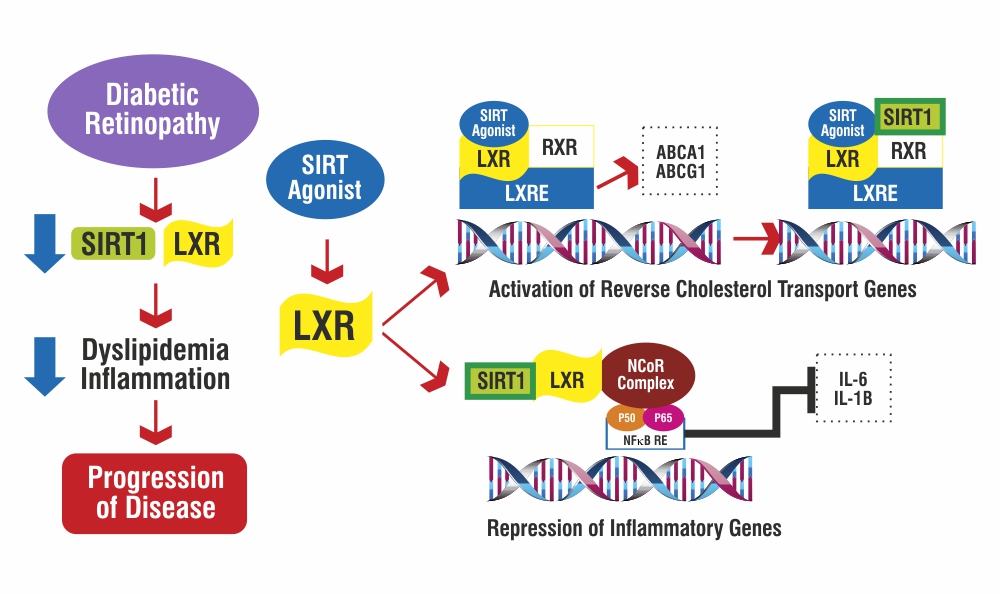
Recent evidence from large clinical trials demonstrating a strong association between lipid abnormalities and DR progression as well as the discovery that pharmacological activation of liver X receptor (LXR) Prevents DR and offers a potential breakthrough in our search for cure of DR. To achieve this goal, analyzing retinal levels of SIRT-LXR as well as investigating the impact DR has on the SIRT-LXR signaling axis. This signaling axis promotes activation of cholesterol metabolism pathways as well as prevents upregulation of pro-inflammatory genes.
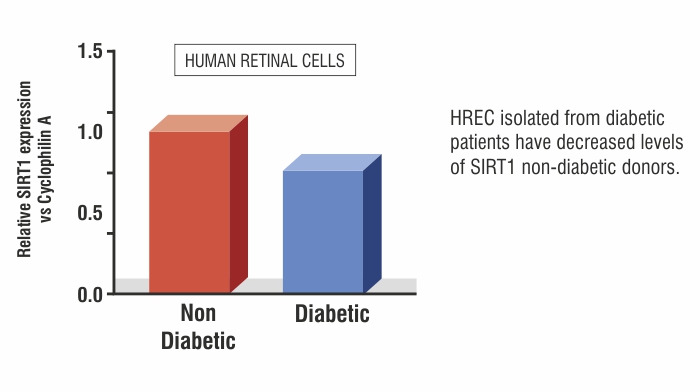
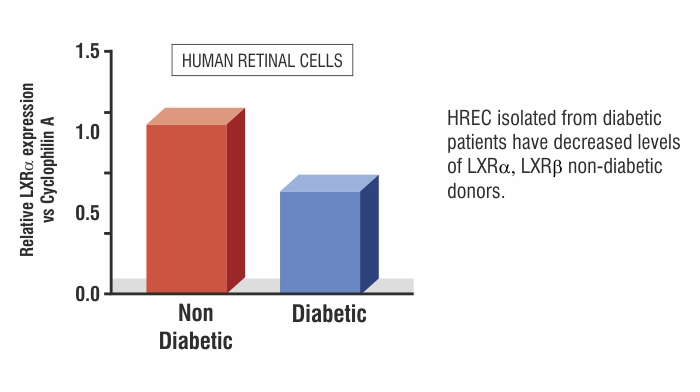
Downregulation of SIRTUIN-LXR axis decreases RCT & increases inflammation in retinal cells.


Diabetic retinopathy leads to down regulation of SIRTUINS from the retinal cells.

Diabetic retinopathy leads to down regulation of LXR from the retinal cells.

How MYOREVAL helps in Retinal revival?

Up regulating SIRT-Nrf2-LXR axis - novel approach in DR

Myoreval upregulates the SIRT-Nrf2-LXR axis

Upregulation of SIRT1, Nrf2, and LXR helps counter dyslipidemia and inflammation, which contribute to the decrease in progression of DR. SIRT-Nrf2 activate LXR, which promotes the activation of reverse cholesterol transport genes (ABCA1, ABCG1) and the repression of inflammatory genes (IL-6, IL-1β) through the SIRT-Nrf2-LXR pathway, reducing inflammation and potentially reversing diabetic retinopathy progression.

Upregulates SIRTUIN & Nrf2

Increases NAD+ expression in Diabetic Retinopathy
  • Decreases lesion formation and hard exudates
  • Inhibits VEGF – decreases impaired angiogenesis
  • Prevents hemorrhages & decreases risk of microvascular injuries
  • Decreases inflammation and overall oxidative damage
>>>>>>>>>>>>>>